Ei
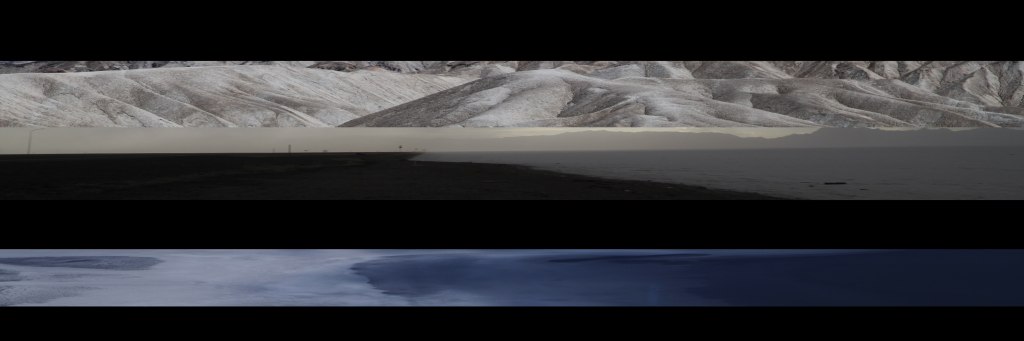
L’installation sonore et vidéographique intitulée ei est une œuvre préoccupée par les thèmes de la disparition, de l’abandon et de l’absence. C’est à cet égard que les images de l’ouest américain prennent leur sens, le désert étant l’endroit où il y a déjà eu existence mais dont il ne reste que l’ineffable trace. Lieu de perte de repères et de temporalité, le désert est également empreint de danger de toutes sortes (chaleur extrême, faune menaçante) : le corps se doit d’y être dans un mouvement continuel pour échapper à l’aridité et la rudesse du climat. En résulte un questionnement plastique sur la représentation d’un lieu en quelque sorte atopique, inspiré notamment du travail entrepris par l’artiste Edward Ruscha en peinture : ici, le désert n’est pas utilisé comme « contenu » (le sable, la chaleur, le mirage et les autres connotations habituellement associées à ce référent), mais pour ses caractéristiques strictement formelles.
 Photo credits: Bettina Hoffmann/www.photo.bettinahoffmann.net
/ENGLISH
Ei
The sound and video installation , ei is a work concerned with the themes of loss, abandonment and lack. It is here that images of the American West have their way, the desert is where there has already been there but there are only trace of the ineffable. Place of disorientation and temporality, the desert is also fraught with danger of any kind (extreme heat, threatening wildlife), the body must be in continual motion to escape the arid and harsh climate . The result is a questioning about the plastic representation of place somehow atopic inspired particular the work undertaken by the artist Edward Ruscha painting: here, the desert is not used as « content » (sand, heat The Mirage and other connotations usually associated with the referent), but strictly for its formal characteristics.
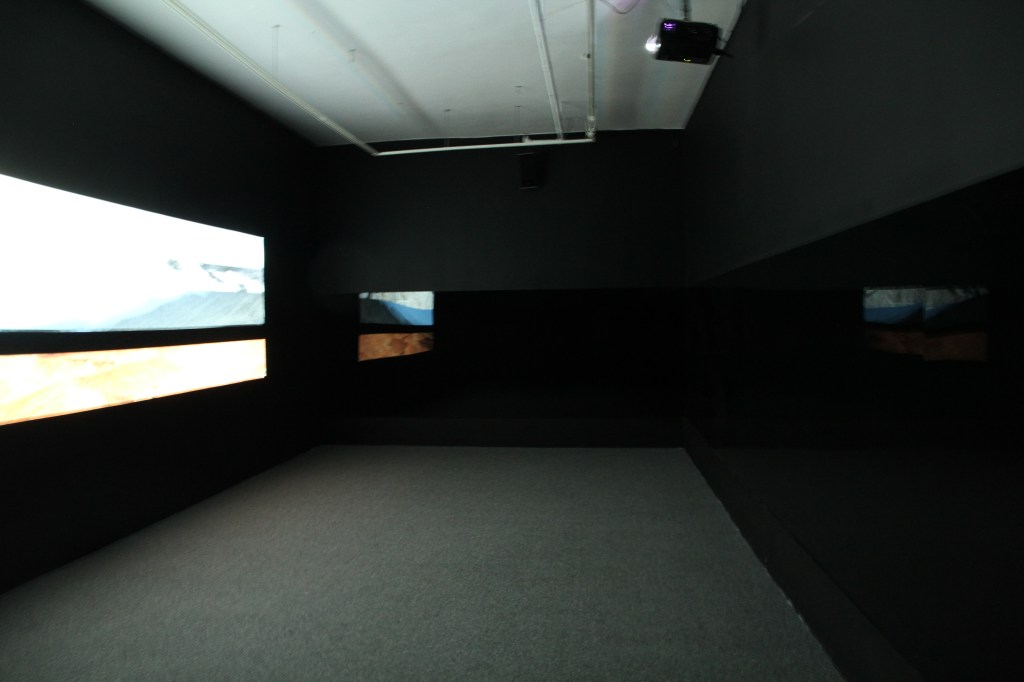 Photo credits: Nelly-Eve Rajotte
Video documentation
Exposition Galerie Optica, 2011
http://www.optica.ca/decades/expo_affiche_annee.php?anne_expo=2011
Extrait video
 Nelly-Eve Rajotte
Vous devez être connecté pour poster un commentaire.